Posted on

Tasting the best of Indian Bean to Bar winners from International Chocolate Awards Asia Pacific 2024

As India’s 1st certified chocolate taster, I bring news that may be hard to swallow for Indian craft chocolate lovers: Indian bean-to-bar chocolates have struggled to secure awards at the prestigious International Chocolate Awards (Asia Pacific 2024 edition). The reasons are many (link). Intense competition, lack of application on behalf of chocolate makers, reliance on single origins and not acknowledging the plethora of indian flavours that can co-exist with chocolate can be mentioned as some of the reasons. In continuation to my efforts to bring you the latest and best from the Indian bean to bar chocolate world, I regularly review Indian award winners. My previous post was about the 2023 winners (there were many!) Shining out are 2 chocolates which we have tasted and reviewed for your benefit. Some of the chocolates are not yet available (at the time of publication) to buy online.

Disclaimer:

I have not been asked or paid to write this review. However, I did receive the samples and transport at no cost. I refrain from judging or reviewing aspects that are not always within the control of the chocolate maker. Therefore, I will not comment on the snap or temper of chocolate that has been transported in tropical conditions. I also avoid discussing the appearance of the chocolate in order to “take the glamour out of the equation” and maintain objectivity.

Typically, I take 55 seconds to a minute to form an opinion with 5 grams of chocolate. I make my “chocolate notes,” and then repeat the process after 15 minutes, strictly adhering to established tasting methods. I taste chocolate only after a meal (sans a dessert), limiting myself to 10 grams from two different chocolates each day. This approach helps me remain objective and prevents palate fatigue, which could lead to inaccurate judgments.

I always strive to identify any defects before I allow myself to spend more time with the chocolate. Often, I will stop a tasting session if I find myself unable to focus, and I won’t resume until the next day. While judging chocolates, I am dramatic yet sincere. This is my personal style. As they say, to each is his own. I have judged at the International Chocolate Awards (Regional & Finals) in London and multiple other locations from 2014 to 2021.

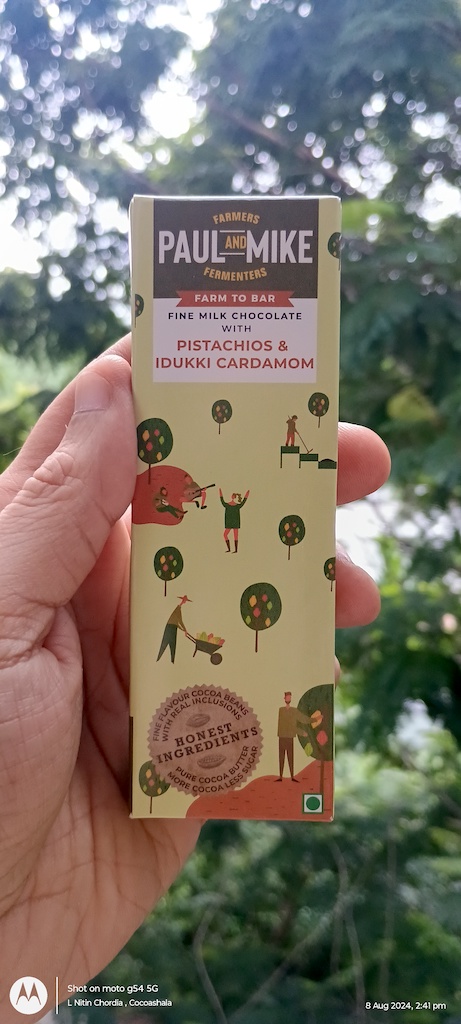
Paul & Mike – Milk Chocolate with Pistachios and Idukki Cardamom (Bronze)

The Milk Chocolate with Pistachios and Idukki Cardamom should be renamed Idukki Cardamom Milk Chocolate with Pistachios. “Heavenly” is the one word that comes to mind immediately. Read on…

To start with, the colour of the chocolate appealed to me greatly. Though it is not much to go by, the blackish colour is usually a put off indicating alkalised chocolate. The perfect light brown, akin to classic milk chocolate, was a pleasing sight. The aroma of the chocolate, had a strange but faint cardamom. It didn’t help set my expectations too high. But when I took a piece, my first encounter was with the perfect amount of cardamom being delivered as the 1st welcome note. Warm and full-bodied, (or can we say whole bodied and robust) the cardamom added a full-filling creaminess and a touch of vanilla to the chocolate. Too much cardamom usually does more harm than good, but the precise use of high-quality cardamom flavoring (oil, in this case) has certainly helped the cause and results in an experience which delights you and sets you up well for more to come.

I don’t bite the chocolate and as it started to melt, cocoa was married to the milk very well, providing a near-perfect creamy delivery. Additionally, the chocolate had a very good balance of fat and sugar. Craft chocolates can become overwhelming with the amount of fat used. The texture of this chocolate was silky and smooth with a good particle size distribution, due to very good refining and delivering a consistency we’ve come to expect from Paul & Mike.
As we enjoy the milk chocolate, a few moments on, I noticed the generous and well-spread pieces of good-sized pistachios. The crunch and nuttiness from the well-roasted pistachios plays the role of a fitter rather than a filler, flattening the sweetness very smartly. The pistachio’s fit perfectly into the flow of the experience, leaving us pieces to chew into and making for a memorable ending. I was not left with an over whelming sweet feeling.

As I finish, I usually try to pay close attention to find any defects in the chocolate and after notes or any shortcomings and find myself empty-handed with this chocolate! Defect-free! This is a delight and rare with Indian craft/bean-to-bar chocolate. This chocolate is an award winner for many reasons.

What worked in this chocolate bar for L Nitin Chordia, India’s first Certified Chocolate Taster: Balance of flavour, high-quality ingredients, and perfectly masked sweetness. What would I do better: I thought hard and I cannot seem add value to this effort to make it better. I would rate this 9/10.

Paul & Mike – Milk Chocolate Coated Salted Capers
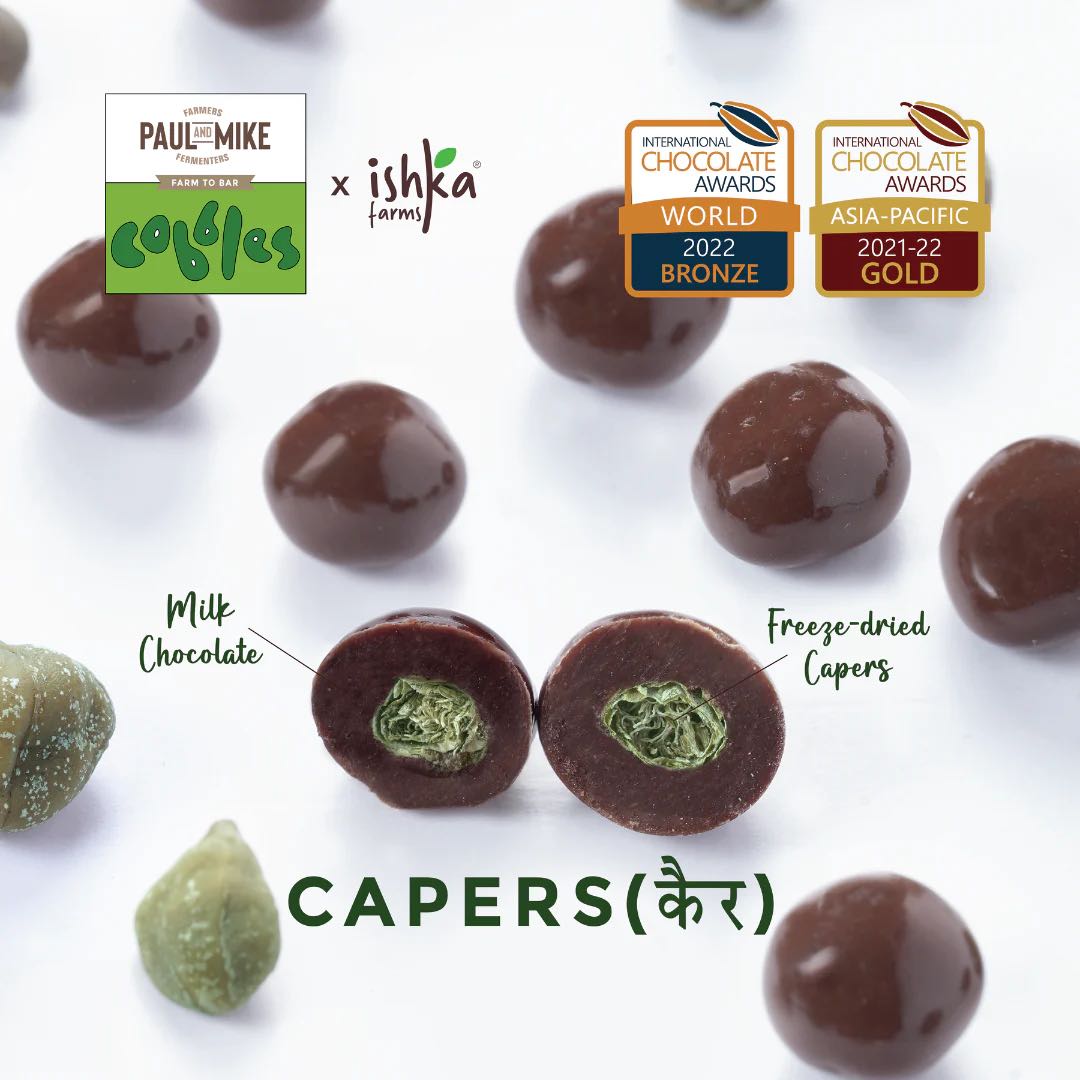
The chocolate coated salted capers has won several awards across the years at the International Chocolate Awards. This is a marquee award winner for Paul & Mike which demonstrates the concept of a western fusion (a.k.a pairing) to Indian craft chocolate. The milk chocolate initially makes for a sweet treat and gives way to the caper on the inside. Coated in perfect amount of milk chocolate, each freeze dried caper is tangy and tart and gives a feeling of it being suspended in brine. One cannot help bite the caper once it arrives and this delivers a burst of flavours and saltiness. This product offers a simple yet fantastic balance of salt, tart, tangy and sweet and tempts you to take another shot at it. This can be called a true master class in balancing flavours.

At no point it seems very salty and the milk chocolate does a perfect balancing act. No credit should be taken away from the freeze dried capers, the real hero in the delivery. What worked for L Nitin Chordia, India’s 1st Certified Chocolate taster: Exceptional pairing of ingredients, High quality ingredients. What would I do better: Reduce a bit of salt and experiment with a few spices. I would rate this 8.5/10.

Indian bean to bar can improve their performances at the International Chocolate Awards. Read a thought piece at: https://cocoatrait.com/chocolates/revolutionizing-chocolate-the-bold-strategy-that-will-make-indian-chocolatiers-global-award-winners/

Contact L Nitin Chordia at +919600064846; nitin@cocoatrait.com
Posted on

Revolutionizing Chocolate: The Bold Strategy That Will Make Indian Chocolatiers Global Award Winners!

Nitin Chordia Chocolate Taster

As India’s 1st certified chocolate taster, I bring news that may be hard to swallow for Indian craft chocolate lovers: Indian bean-to-bar chocolates have once again struggled to secure awards at the prestigious International Chocolate Awards (World Finals 2025). While introspecting, despite significant participation, what comes out clearly is that Indian craft chocolate makers, over the years, have consistently fallen short in key areas and hence are unable to carry the baton forward:

  1. Lack of Imagination and Innovation: Indian makers often lack the creativity to produce the “chocolate magic” that captivates judges and audiences. Their innovations are typically safe and predictable, failing to push boundaries. In contrast, international award winners excel by using unique local flavors, unexpected combinations, and scientific techniques to create chocolates that surprise and delight. We currently see a lot of “me too’ variants in Indian chocolates.  
  2. Missed Basics: Indian makers frequently overlook fundamental aspects such as understanding the cocoa bean’s capabilities, balancing flavors, and perfecting texture. Successful chocolatiers invest significant time in mastering these basics, ensuring each chocolate has the perfect balance and texture.
  3. Flawed Recipe Development: Indian makers often create multiple chocolate percentages with the same bean, limiting their potential for unique, award-winning creations. Top chocolatiers use different beans for various percentages, tailoring recipes to highlight each bean’s strengths.
  4. Underutilization of Traditional Flavors: Indian makers have not fully harnessed the rich variety of local flavors or embraced international flavors. Chocolatiers from regions like Japan skillfully blend local and international flavors, creating diverse, intriguing chocolates that stand out in competitions.
  5. Excessive focus on the Indian Cocoa Beans: Indian makers focus heavily on beans with limitations in bitterness, astringency, and acidity, restricting their creative potential. To win global accolades, they need to diversify their beans, using a variety of origins to create chocolates with complex, diverse flavor profiles.
  6. Intense Competition: Indian makers face fierce competition from countries like Japan, Taiwan, and Thailand, where artisans consistently innovate and set high standards in chocolate making. These countries push the boundaries of chocolate craftsmanship.
  7. Cost-Centric Approach: Many Indian fine chocolate brands treat fine flavor chocolate as a typical “food cost +” business, prioritizing cost over flavor. This strategy is failing. Successful makers focus on flavor and quality, investing in high-quality ingredients and innovative techniques, even at higher costs.
  8. Neglect of Craftsmanship: Indian makers need to shift focus from the cocoa bean to the chocolatier’s skill and artistry, creating extraordinary chocolates even with basic ingredients. Emphasizing craftsmanship and continually improving skills and techniques is crucial for producing exceptional chocolates.

Noteworthy: Indian cocoa beans, which have been exported for over 5 years, have been used by international makers to craft award-winning chocolates, proving their potential. The real challenge is to leverage this potential through enhanced chocolate making craftsmanship, right tools, out-of-the-box thinking, innovation, and the strategic use of diverse flavors. Following are the strategies required to make Indian Chocolate makers Global Award Winners!

To elevate Indian bean-to-bar chocolates to a competitive level and secure wins at international awards, Indian chocolatiers need a strategic, well-rounded approach. Drawing from a decade of global experience, we recommend the following strategies for Indian bean-to-bar makers to elevate their chocolates on the global stage:

  • Strategic Recipe Development: Move away from developing multiple percentages with the same bean. Tailor recipes to the strengths of different cocoa beans.
  • Diversify Flavors and Ingredients: Utilize India’s rich variety of flavors to craft unique and innovative chocolate profiles purely based on merit of the application. 
  • Enhance Craftsmanship: Invest in training artisans to recognise the factors that lead to success and create extraordinary chocolates, even with the limitations of Indian cocoa beans.
  • Think Beyond Indian Cocoa: After introducing products with indian cacao purely on merit, Introduce cocoa beans from various origins to diversify flavor profiles and compete internationally.
  • Innovate with Purpose: Align creativity with the taste preferences and standards of international judges while keeping in mind the local tastes and market/consumer requirements, ensuring innovations are both unique and appealing yet not a forcefit or made just for the awards.
  • Benchmark Against Global Standards: Study and adopt relevant innovations from regions like Japan, Taiwan, and Thailand to enhance the quality and creativity of Indian chocolates, again purely based on merit rather than copy!
  • Follow food/flavour/ingredient trends: It is important to derive inspiration from international trends from the food/sweets industry and incorporate again purely based on merit rather than copy!
  • Focus on Fundamentals: Strengthen the basics—flavor balance, texture, and presentation—to meet and surpass international standards. Analyse each ingredient carefully. “Rubbish in is rubbish out!”.

By following this detailed plan, Indian bean-to-bar makers can systematically enhance their craft, innovate effectively, and position themselves to win prestigious international chocolate awards.

About Cocoatrait & L Nitin Chordia:

L Nitin Chordia is India’s 1st certified chocolate taster (2014) and operates Cocoashala, India’s only Bean to Bar Chocolate incubation and training unit. Cocoashala is an innovative incubation unit dedicated to nurturing and developing bean-to-bar chocolate brands. With a focus on quality, sustainability, and education, Cocoashala aims to empower chocolate makers by providing comprehensive training, resources, and support. Its objectives include fostering creativity in chocolate making, promoting ethical sourcing of cocoa beans, and elevating the standards of artisanal chocolate production. Through its programs, Cocoashala seeks to create a thriving community of skilled chocolate makes who are committed to excellence and sustainability in the chocolate industry. With its 1st of its kind program CocoaAscend, Cocoashala intents to establish India firmly in the global Bean to Bar chocolate space. Cocoashala also is the Indian partner of IICCT, UK and hosts the popular chocolate tasting certification courses for global audiences in India.

Press Contact: L Nitin Chordia; Contact: +919600064846nitin@cocoatrait.com

Posted on

Cocoashala Launches CocoaAscend: Elevating Bean-to-Bar Chocolate Makers to Global Award Winners!

Cocoashala, a leading chocolate training academy, announces “CocoaAscend” a transformative program designed to help bean-to-bar chocolate makers achieve top-tier quality. This 1st of its kind partner program is aimed at gaining prestigious global awards and recognition, thus, transforming them into industry leaders.

Background: Indian cacao and bean-to-bar chocolate makers have faced significant criticism and a recent drought of awards at the Asia Pacific level due to fierce competition from Taiwan, Thailand, Japan, and China. This highlights the need for Indian chocolatiers to elevate their craft and ensure India shines on the global stage. The core issues are a lack of imagination, innovation, application, intent, vision, insights, and a competitive spirit—all essential for creating “chocolate magic.” It’s time for Indian makers to step up and showcase their true potential.

Spearheaded by L Nitin Chordia, India’s first certified chocolate taster and founder of Cocoashala, the CocoaAscend program offers comprehensive support, covering every aspect of chocolate production and brand development, from raw material sourcing to product marketing and distribution. “Our mission with CocoaAscend is to guide chocolate brands through a transformative journey, helping them achieve unparalleled excellence and global recognition” said L Nitin Chordia. “With our extensive experience and deep industry knowledge, we are committed to elevating the standards of chocolate making and ensuring that our participants succeed on a global stage.”

CocoaAscend Program Highlights:

  • Raw Material Sourcing: Ethical, sustainable practices for premium cacao.
  • Storage & Machinery: Optimize conditions and introduce advanced / optimal equipment.
  • Manufacturing & Recipes: Improve process, Enhance consistency, flavor, and texture.
  • Branding & Packaging: Develop compelling brand stories and sustainable packaging.
  • Marketing & Distribution: Strategic market visibility and penetration.
  • Awards Preparation: Guidance on preparing, entering and excelling in competitions.

Benefits of CocoaAscend:

  • Enhanced product quality with superior flavor and texture.
  • Increased market visibility and consumer engagement.
  • Industry recognition through awards and accolades.
  • Sustainable practices for long-term success and profitability.

CocoaAscend is set to revolutionize the bean-to-bar chocolate industry by providing the tools, knowledge and insights necessary for brands to achieve excellence. With Cocoashala’s expert guidance, participants will not only create award-winning chocolate but also establish themselves as leaders in the market.

About Cocoashala & L Nitin Chordia:

L Nitin Chordia, based in Chennai, is India’s 1st Certified Chocolate Taster. Nitin has been a judge at the International Chocolate Awards, London. Cocoashala has trained most top bean to bar makers in India and helped them grow in this highly profitable and exciting Bean to Bar chocolate making industry. Since 2019, Cocoashala has been working tirelessly to promote the cocoa and bean to bar chocolate industry in India by nurturing startups and providing them with the necessary resources to succeed. Over the last decade, we have offered various courses to help bean to bar makers succeed in India and globally. The link to the courses are: https://cocoatrait.com/product-category/shop/events/

Posted on

The Ultimate Guide to Ceremonial Cacao in India: Unveiling the Ancient Elixir

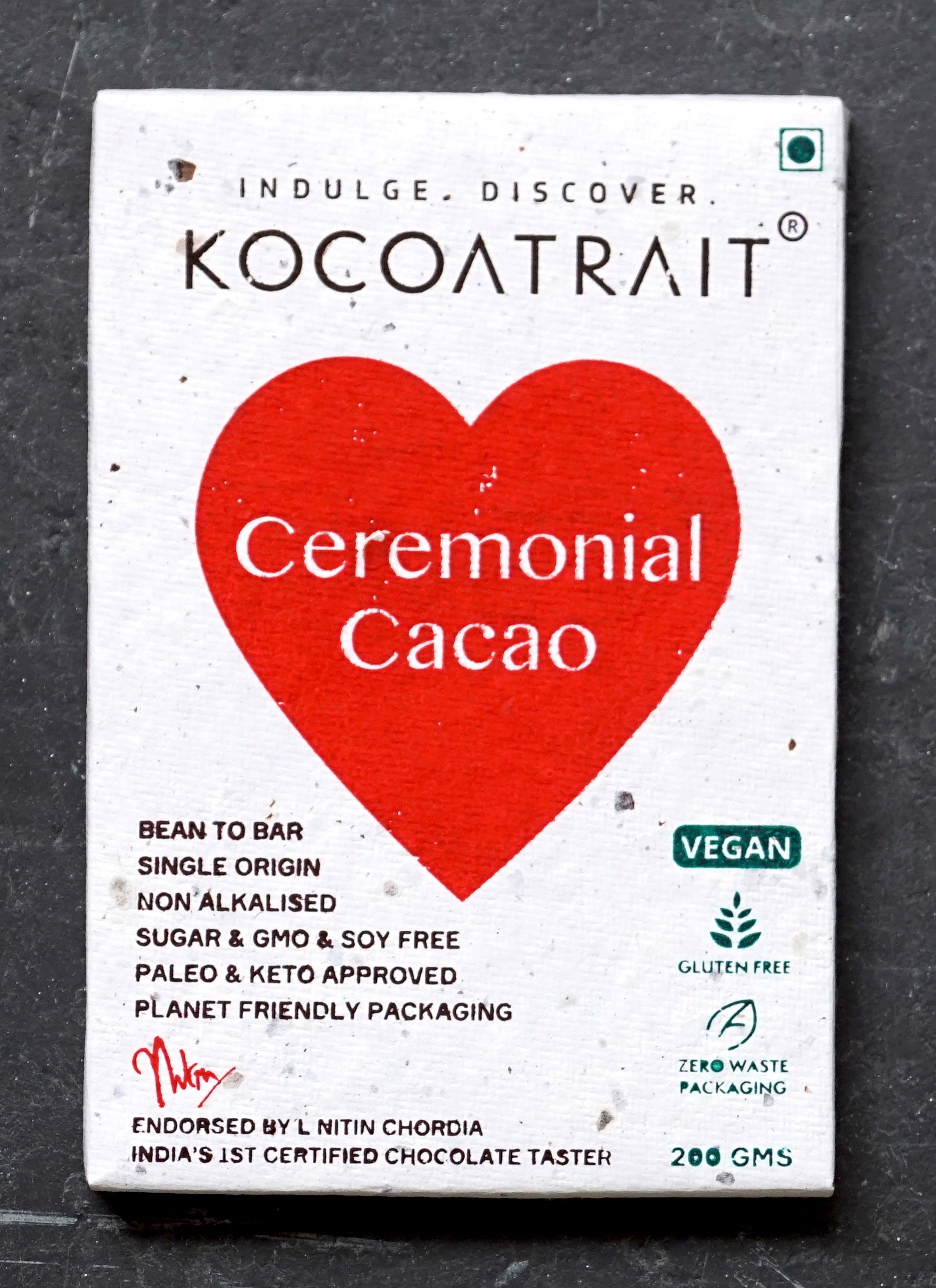
Kocoatrait Ceremonial Cacao
Kocoatrait Ceremonial Cacao India

Are you looking to delve into the world of ceremonial cacao and you are currently based in India? You’ve come to the right place. This ancient elixir has been cherished for centuries, and today, it’s making a significant comeback. In this comprehensive guide, we’ll explore everything you need to know about ceremonial cacao, from its history and benefits to how to use it for your own ceremonies.

What is Ceremonial Cacao?

Ceremonial cacao is more than just chocolate; it’s a sacred plant medicine used in traditional ceremonies for spiritual and healing purposes. Unlike regular chocolate, which is processed and often contains additives, ceremonial cacao is pure, minimally processed, and made from high-quality cacao beans.

The History of Ceremonial Cacao

The use of ceremonial cacao dates back to ancient Mesoamerican cultures, including the Mayans and Aztecs. These civilizations revered cacao as a divine gift, using it in rituals, ceremonies, and as a form of currency. The word “cacao” itself comes from the Mayan word “ka’kau,” and the cacao tree’s scientific name, Theobroma cacao, translates to “food of the gods.”

The History of Ceremonial Cacao in India

The use of ceremonial cacao in India is more recent and not yet popular. However, this trend is changing fast.

Health Benefits of Ceremonial Cacao

Ceremonial cacao is packed with nutrients and compounds that offer a plethora of health benefits:

  • Rich in Antioxidants: Cacao is one of the richest sources of antioxidants, which help combat free radicals and reduce inflammation.
  • Mood Enhancer: The presence of compounds like theobromine and phenylethylamine in cacao boosts mood and promotes a sense of well-being.
  • Heart Health: The flavonoids in cacao can improve heart health by lowering blood pressure and improving blood flow.
  • Increased Focus and Clarity: Ceremonial cacao can enhance mental clarity and focus, making it an excellent tool for meditation and spiritual practices.

How to Prepare Ceremonial Cacao

Preparing ceremonial cacao is a simple yet profound process. Here’s a step-by-step guide:

  1. Choose High-Quality Cacao: Start with high-quality, organic ceremonial cacao. Look for brands that source their beans ethically and sustainably.
  2. Measure the Cacao: A standard dose is around 1 to 1.5 ounces (28-42 grams) per person. This can vary based on the experiences a person has had in the past.
  3. Heat the Water: Heat water to just below boiling. Avoid using boiling water as it can destroy the beneficial compounds in cacao. Alternatively, boil water and let it cool for a minute before proceeding to the next step.
  4. Mix the Cacao: Place the cacao in a bowl or blender, add the hot water, and blend until smooth. You can also add natural sweeteners like honey or agave, spices like cinnamon or chili, herbs like maca or shatavari and a pinch of sea salt.
  5. Set Your Intention: Before consuming the cacao, set a clear intention. This could be for healing, clarity, creativity, or any other purpose.
  6. Drink Mindfully: Sip the cacao slowly, savoring each sip and staying present in the moment.

How to Use Ceremonial Cacao in Your Spiritual Practice

Ceremonial cacao can be a powerful addition to your spiritual practice. Here are some ways to incorporate it:

  • Meditation: Use ceremonial cacao before meditation to deepen your practice and enhance your focus.
  • Journaling: Drink cacao before journaling to open your heart and mind, allowing for deeper reflection and insight.
  • Group Ceremonies: Host a cacao ceremony with friends or community members to share the experience and amplify the energy.
  • Yoga: Combine cacao with a yoga session to enhance your physical and spiritual connection.

You can enjoy and use the below ceremonial cacao music which we have composed.

Ceremonial Cacao Music

Where to Buy Ceremonial Cacao in India

When purchasing ceremonial cacao, it’s essential to choose reputable sources. Look for companies that prioritize ethical sourcing, fair trade practices, and sustainability. Understand the difference between regular chocolates and ceremonial cacao and what Ceremonial Cacao Kocoatrait offers at (click link): https://cocoatrait.com/product/kocoatrait-100-dark-ceremonial-cacao-in-india/

Conclusion

Ceremonial cacao is a powerful tool for personal and spiritual growth. Whether you’re new to this ancient elixir or looking to deepen your practice, incorporating ceremonial cacao into your life can bring profound benefits. Remember to approach it with respect and intention, honoring its rich history and the wisdom of the cultures that have used it for centuries.

Discover the magic of ceremonial cacao in India and let it guide you on your journey to wellness and spiritual enlightenment. Start your cacao journey today and experience the transformative power of this sacred plant medicine.

By following these tips and insights, you’ll be well on your way to enjoying the myriad benefits of ceremonial cacao, all while honoring its rich history and traditions. To know more and host ceremonies in India contact: +91 9600064846; nitin@cocoatrait.com

Posted on

Cocoa Bean Prices in India

We are currently seeing mayhem on the cacao stock exchanges worldwide, the prices of a commodity which we cannot easily assume anymore.

Cacao, often referred to as the “food of the gods,” is a highly sought-after commodity globally, valued for its use in producing chocolate and other confectionery products. Derived from the seeds of the cacao tree (Theobroma cacao), this tropical plant is primarily cultivated in regions near the equator, including West Africa, Latin America, and Southeast Asia.

As a commodity, cacao holds significant economic importance, with a complex supply chain involving farmers, exporters, processors, and manufacturers. The market for cacao is influenced by various factors, including weather conditions, labor costs, ever increasing global demand for chocolate products, and government policies in producing countries.

The trade of cacao involves both raw cacao beans and processed products like cocoa powder and cocoa butter. Futures contracts for cacao are traded on commodity exchanges, allowing stakeholders to hedge against price fluctuations and manage risk in the volatile market.

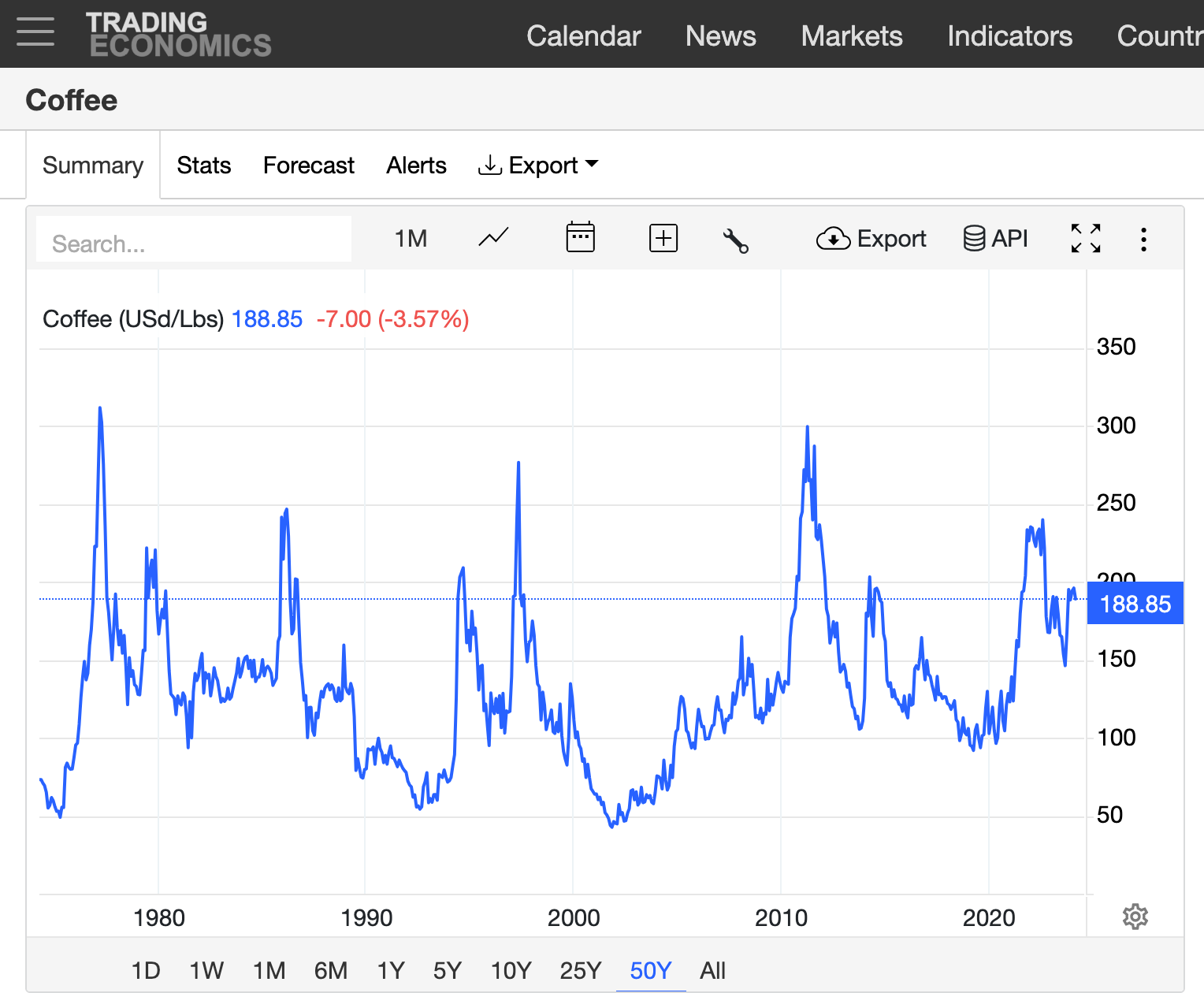
Let’s take a brief detour into Coffee as a commodity has a cyclical price trend and estate owners make up for their losses to maintain an estate usually easily with every upturn in the cycle. A 10 year steep fall with several 3-4 year cycles is typical in coffee with ups and downs providing opportunities to one and all in the business. The graph below is self explanatory.https://tradingeconomics.com/commodity/coffee. But why are we still not talking about cacao?

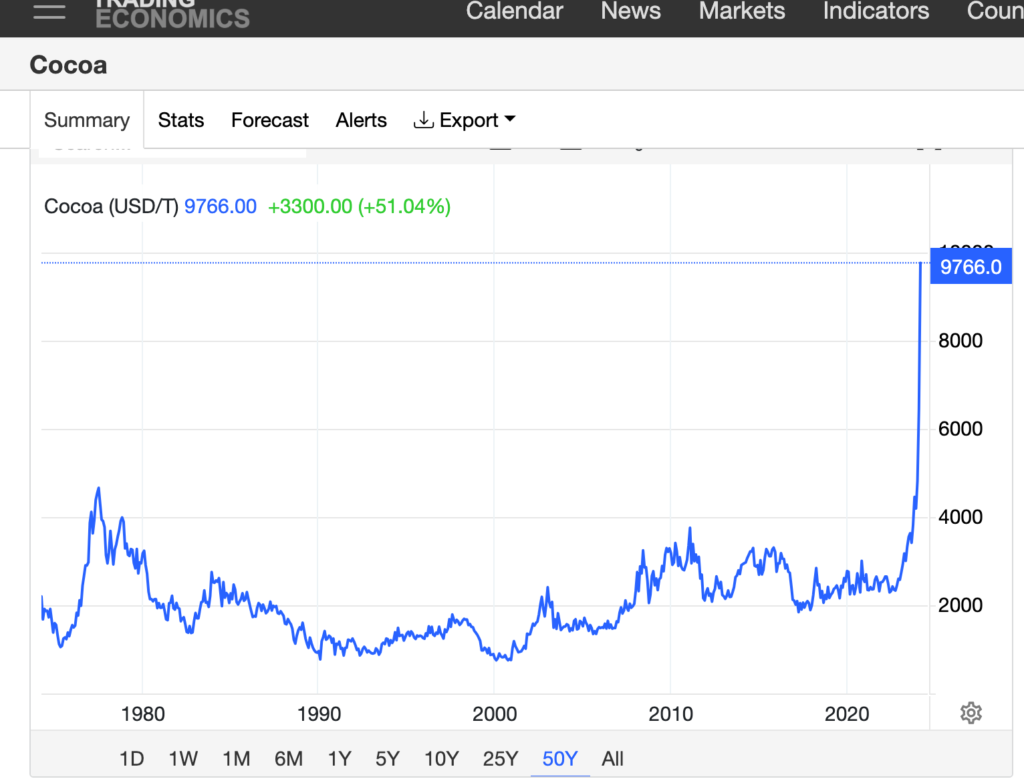
Let’s now dive into cacao, a commodity or crop which makes our favourite chocolate! Most consumers do not associate this crop with their chocolate but the current news about it being valued the same as copper raises many eyebrows and garners the required attention to this commodity.

I’d like to bring to the table a few facts. In the last 50 years cacao has been a rather stable price crop with an exception of a price spike in 1977 and the increase caused due to extreme weather events that impacted the crops and hence production in West Africa. West Africa produces around two-thirds of the world’s cocoa and it is expected that any impact (small or big) is bound to imbalance the world’s demand/supply situation. The background behind the current unprecedented increase or spike in the pricing needs to be understood. Cacao prices have not seen this surge in the past ever. Cost of inputs to farmers have not changed in the last 8 months. The price difference Bulk Vs commodity cacao is narrowing and this does not augur well for either mass or speciality chocolate brands. While the earlier price differential used to be 50% (between bulk Vs speciality cacao). With the prices of bulk cacao increasing three times, that differential will now be unaffordable by both the speciality chocolate manufacturers and consumers alike.

What we expect: At Cocoashala, we expect the prices to start cooling off within the next 3-4 months and then we are looking at prices reducing over a 2 year period and stabilising at the 3500 USD/ton levels. Will the next 2 years impact the chocolate consumer? Yes! While manufacturers will find smart ways to keep the consumer happy to buy more chocolates, consumers would see their sweet treats becoming more expensive and they would basically have to pay more for lesser. Cocoa butter which costs 3 times the price usually will continue to remain the most critical input to the chocolate industry and the prices would take longer than the cacao bean to cool off.